

The smart classroom and EdTech market will be worth $434.96 billion in the year 2029. Moreover, the compound annual growth rate will be around 19.5%, according to educational statistics.
Are you an instructor or a student, who is interested in exploring the use of AI in smart classrooms? In this guide, we will focus on the AI trends for effective education. Moreover, explore the tools, benefits and limitations of using AI in education.
Ready to streamline the smart classroom experiences with AI?
What is a smart classroom?
Smart classrooms are strategically influencing and evolving the future of education with the use of technology and AI. They use collaborative, personalised and interactive activities and experiences to enhance student’s learning.
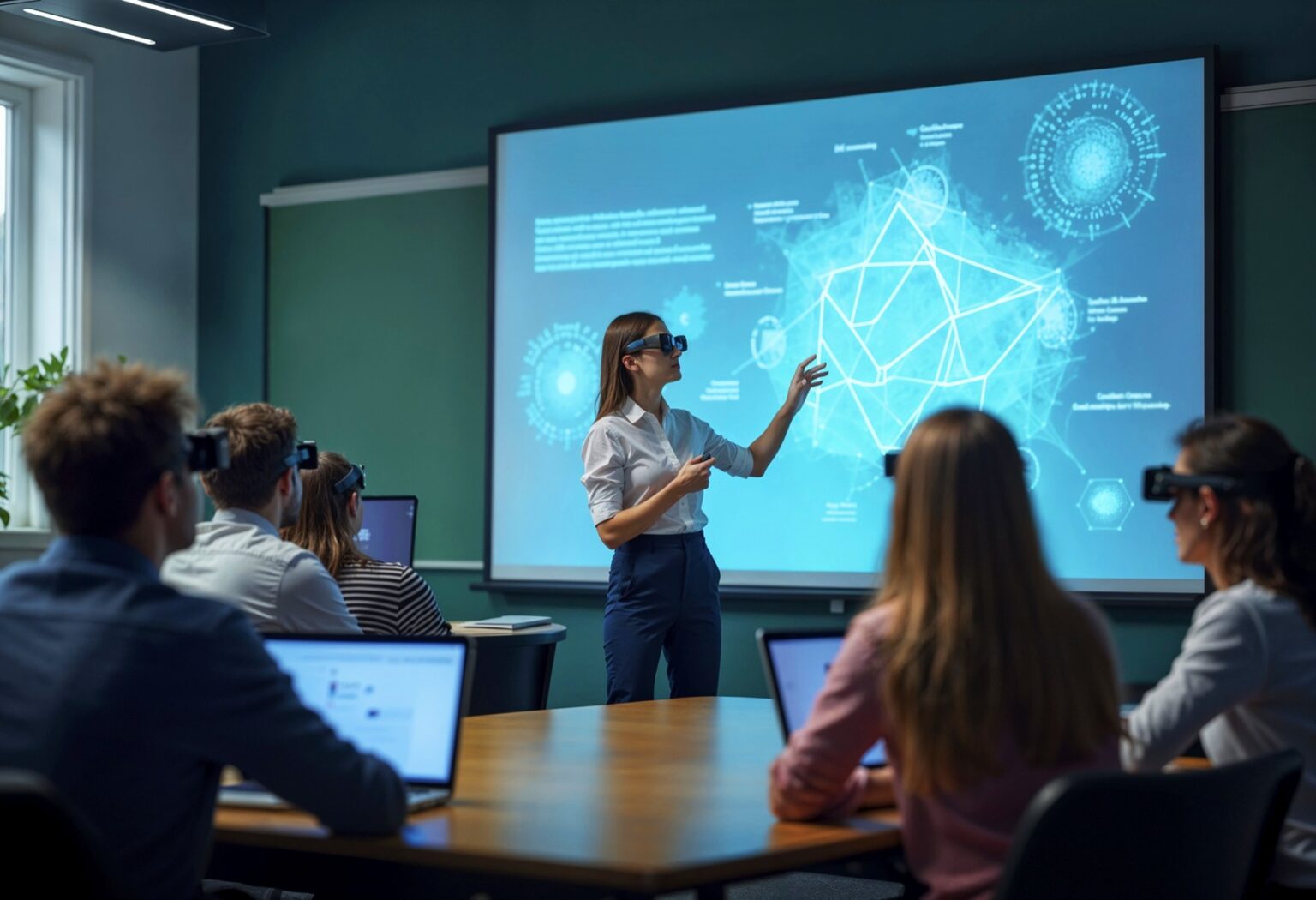
Such modern classrooms are the learning spaces where students interact with technologies like AR/VR, virtual chatbots and digital learning. Following are some of the major components of a smart classroom:
Use of Technology
The key role of such learning environments is to integrate evolving technology within the learning experiences of students. The technology used in such classrooms include tablets, virtual assistants, learning management system (LMS), online educational apps and more.
The purpose of using technology is to maintain the engagement rate of students throughout a lecture. Moreover, it helps in simplifying complicated subjects and learning material.
Interactive Whiteboards
The use of interactive whiteboards in smart classrooms help teachers in making the lessons more interactive with activities and multimedia. Tools like Jeda.ai, Canva whiteboard and more offer AI tools to promote real-time learning with automated activities and gamification.
Digital Content Resources
Students and teachers aren’t bound to rely on textbooks for upgrading information. They can utilise a variety of accessible and student-friendly resources from the internet.
These digital resources might include articles, infographics, informative tutorials, diagrams, audio books and more. Moreover, teachers can utilise AI agents to track the resources and combine them into personalised learning plans or curriculum designs.
Blended Learning
Blended learning is the mode of learning where students gain knowledge from both online and offline learning formats. Smart classrooms use blended learning to provide a student-centred environment where students can learn autonomously through recorded lectures and discussions.
Students can leverage the automated feedback and assistance of virtual bots within the learning management systems (LMS) for enhanced learning.
Integration of EdTech
EdTech is mostly a part of such smart learning environments that promotes AI in education. Teachers use automated student grading systems, student behaviour analysis and automated assessments to fill the gaps in teaching approach.
Moreover, teachers use EdTech software like content authoring tools for curriculum planning and content creation.
Enhanced Content Access
Cloud storage and servers have made learning content and resources more accessible for students and teachers. Students can access materials like recorded lectures, assignments, and notes for learning, even when they aren’t in the classroom.
Trends that prove the transformative role of AI in smart classrooms
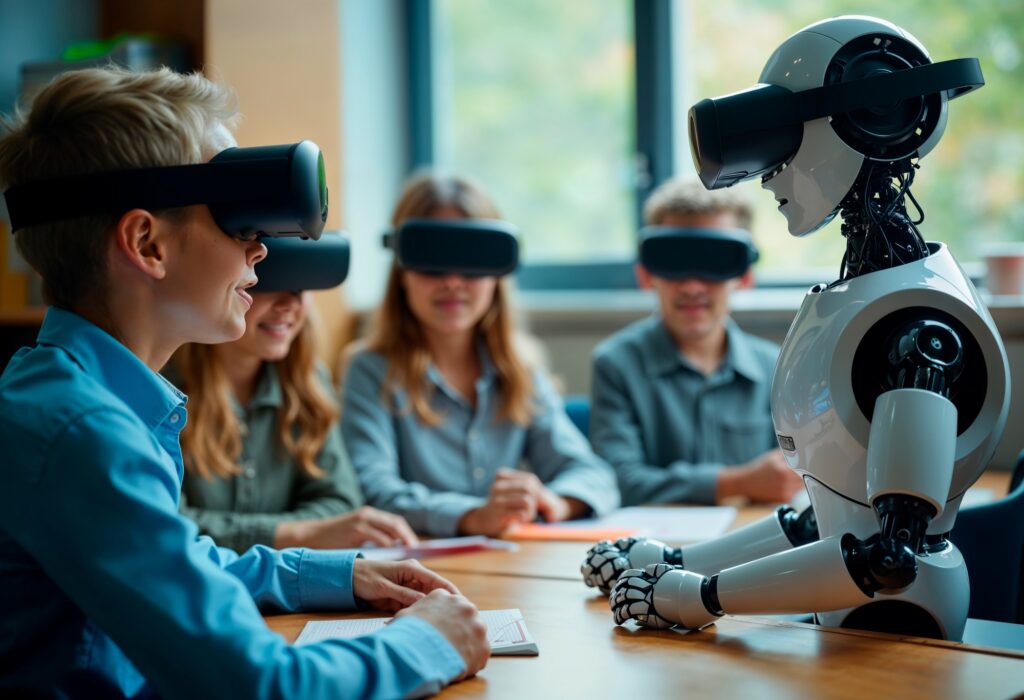
The purpose of using AI in the classroom is to evolve learning experiences, self-assessment and correction ability in students. Following are some of the smart learning and classroom trends that uses artificial intelligence:
Adaptive Learning Experiences
The adaptive learning technology has encouraged learner’s autonomy with the help of customised learning paths. AI tools assess a learner’s ability and learning level by assessing their knowledge and learning style. The customised learning paths are planned according to student’s needs to support better understanding.
Intelligent Tutoring Systems
The ITS platforms or intelligent tutoring systems offer feedback and support the students by utilising AI algorithms. These AI algorithms track the progress of learners in real-time, while they solve activities or questions.
Enhanced Curriculum Planning
Educators utilised assistive AI technology to gather and analyse data for spotting latest trends and predictions. Using AI tools for curriculum planning ensures that it is relevant, extensive and covers the identified gaps in learning areas.
Interactive & Virtual Bots
Conversational AI or chatbots are used to solve student queries at any time in the absence of an instructor. Many chatbots also offer features like alerts for deadlines and assistance with classwork and homework for autonomous learning.
Enhanced Learning Management System
Traditional learning management systems (LMS) were used to update and provide access to educational content like notes or recorded lectures. Modern LMS are optimised with artificial intelligence to provide student’s analytics, automate tasks and offer personalised learning opportunities.
Gamification Experiences
Educators can optimise student’s learning and classroom experiences with the help of AI tools that gamify complex problems and questions. According to statistics, around 90% of educators think that gamification has increased students’ engagement rate.
Gamification activities like interactive quizzes and the use of badges, scores and points target student’s psychology to enhance motivation.
Automated Monitoring System
The automated AI systems used for monitoring students’ behaviour’s during examinations helped in achieving educational integrity. These tools are used for ensuring a secure and transparent testing environment.
Moreover, AI uses smart features like facial recognition, eye movements and analysis of audio to observe and identify any suspicious activity.
Automated Grading & Feedback
The automation of the grading process has freed educators from the manual tasks of marking exams and assignments. AI tools help teachers in offering timely feedback to provide instant correction opportunities for students.
Moreover, these tools also offer intelligent recommendations and suggestions for students. They also help instructors by marking abstract assignments by analysing the entire content for clarity and topic relevance.
Effective Language Learning
Teachers can use language learning applications like Duolingo that leverage AI technology and algorithms to offer adaptive learning material. Using these interactive tools in language learning classes can improve student’s motivation and retention. Moreover, students can also optimise their language acquisition process with progress-based exercises.
Automated Content Creation
Educators don’t need to rely on manual content creation for study material. There’s a variety of content authoring tools including like LearnWorlds, Absorb LMS and more that help with content generation.
Instructional designers can use these tools to plan and create quizzes, assignments, assessments and more. Moreover, instructors can use AI tools to plan individualised educational plans for diverse learners.
Automated Plagiarism Detection
Teachers can use plagiarism detectors in smart classrooms to analyse students’ assignments against a large volume of online data. This helps the instructors in assessing a learner’s progress and the originality of their submitted work.
AR and VR Experiences
Instructors can use Augmented Reality (AR) and Virtual Reality (VR) experiences to simulate real-world experience in the classrooms. Student’s learning is enhanced with immersive and realistic experiences that is provided by artificial intelligence.
Moreover, teachers can use such experiences to polish the critical thinking and creative abilities of the learners.
How AI in smart classrooms benefit students and teachers?
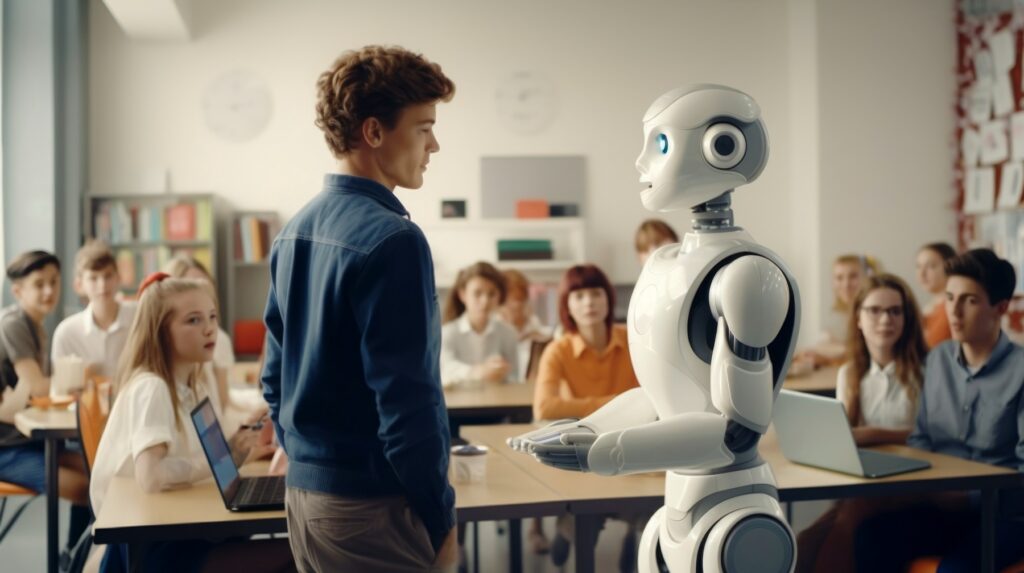
Students and teachers can avail the following benefits of using AI in smart classrooms:
Automation of Tasks
Educators can optimise their work progress by using AI tools for automating tasks like student grading, feedback and assistance. The automation of tasks helps teachers to focus on improving their teaching style or lesson planning.
Full-time Assistance
Students don’t need to wait for hours to get a response for their query. The implementation of virtual assistants and AI chatbots within LMS have evolved the student experience with timely responses.
AI Tutoring
AI tutors analyse and plan students’ learning plans after assessing their needs and learning habits. The customised tutoring can help students with timely feedback and learning assistance. Meanwhile, instructors can save their time with such tutoring assistants by utilising them for explaining a concept multiple times.
Enhanced Engagement
The personalised learning approach in smart classrooms with the help of AI technology improves the learner’s engagement rate. Moreover, interactive activities, integration of EdTech and custom plans maintain interest.
Enhanced Motivation
The gamification of complex knowledge and AI assistance in classroom experiences have enhanced learner’s motivation.
Challenges that prevent the use of AI in Education
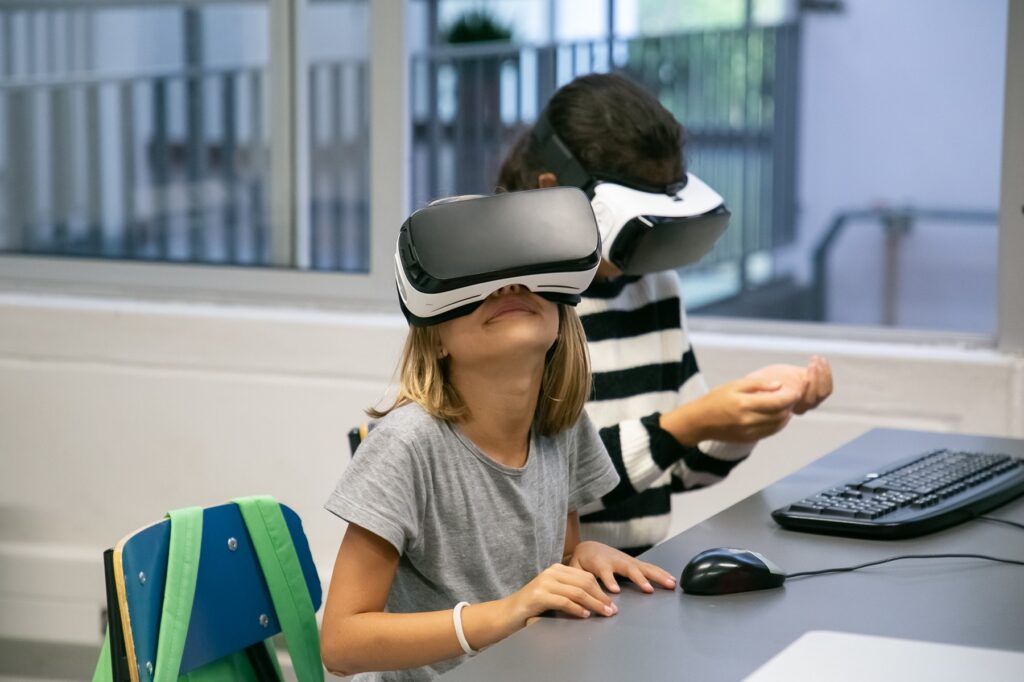
AI in education has transformed the traditional classrooms into smart learning experiences with automation and intelligent algorithms. However, there are some limitations that are faced by institutions when the use of AI in classroom is concerned:
Lack of Data Protection
AI models in the classroom train on a variety of student data including learning styles, student profiles, and test scores. However, it is significant to take proper security measures before letting the AI algorithms train on such student data.
Schools and instructors should ensure data protection with the use of authentic and secure AI tools. It is important to research that an AI platform is abiding by compliance laws, utilising passwords and security systems.
Lack of Digital Access
A classroom caters to a diverse section of students with various economic backgrounds. Students with the lack of access to digital devices and technology can’t utilise the positive impact of AI in education.
However, this limitation can be tackled by collaborating with non-profit organisations (NGOs) and arranging devices for all students. Moreover, every educational institute should offer free-of-cost digital devices and internet connections for students within classrooms.
Lack of Trained Staff
Many educational institutes face the challenge of untrained staff when it comes to using AI in education. Moreover, most of the time instructors are reluctant to use the evolving technology. Meanwhile, many of them plainly resist it making it difficult for institutes to offer engaging and interactive learning experiences.
The best way to remove this limitation is to arrange regular teacher training opportunities or workshops. The expert advice can help the educators in realising the positive effect of AI on their teaching approach.
AI tools for evolving smart classroom experiences
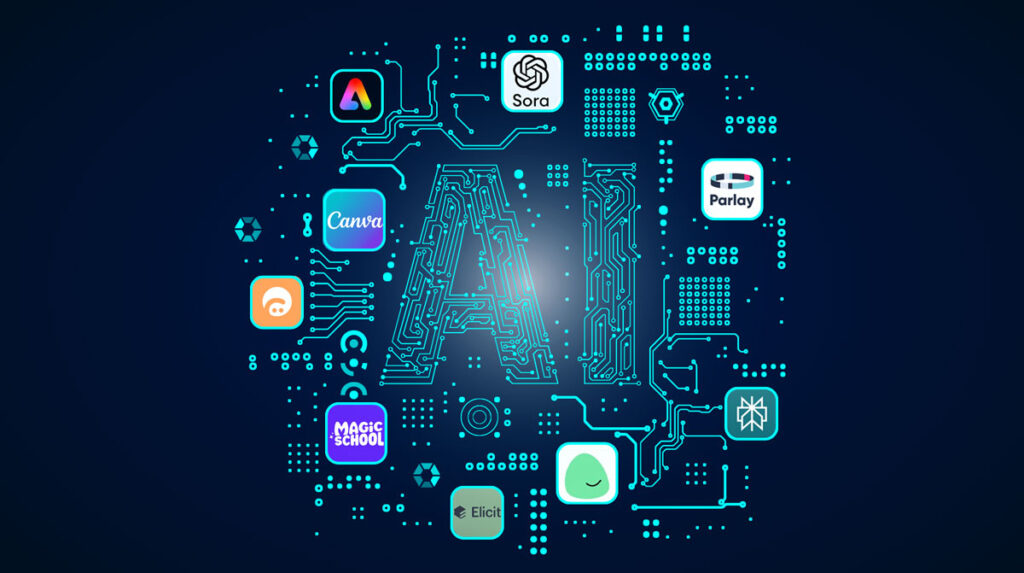
Smart learning experiences can be transformed for efficient results and enhanced student retention. Here’s a list of some of the best AI tools that can be used in 2026:
SchoolAI
SchoolAI is an EdTech platform that is used by coaches, teachers, learners and more. It is an online tutoring platform that utilises artificial intelligence (AI) tools for providing students’ analytics and progress.
Many educational institutes utilise SchoolAI to track various learning needs and for providing customised learning experience for every student. It offers a secure learning environment with advanced monitoring tools.
Moreover, the platform is user-friendly and supports a range of learning styles to cater to diverse learner needs.
It offers a free version for teachers and two additional pricing plans such as Pro and Scale with custom pricing.
ChatGPT
Students and instructors can utilise ChatGPT as a friendly assistant to enhance the learning experience. The AI chatbot utilises transformer neural networks and NLP technology to provide a smooth conversational experience.
Students can utilise the AI tool to get help with their assignments, research work or essay writing. ChatGPT helps with simplifying complicated content into bite-sized information for quick understanding.
Moreover, instructors can use the AI model for preparing study material like quizzes, assignments, lesson plans and more.
Users can enjoy the full-time assistance of the conversational AI model and upgrade their learning experience anytime.
ChatGPT offers a free model and paid packages that starts from a $20 monthly subscription.
Carnegie Learning
Carnegie Learning is a platform for enhancing mathematical knowledge with the help of AI technology. The EdTech platform assesses the weaknesses and strengths of a student to customise learning plans according to ability.
Teachers can use the AI tool in smart classrooms to track the real-time progress of a student in advanced topics. Moreover, educational institutes can utilise the interactive exercises to ensure extensive mathematical support for learners.
The platform also offers solutions like ClearMath, ClearServices, ClearLiteracy and ClearLanguages for enhancing various learning experiences.
Socratic
Socratic is an EdTech platform that utilises the features of Google AI. Schools and instructors can use this tool to provide learning support for multiple subjects including geometry, physics, algebra, writing and more.
Students can use Socratic to understand complicated concepts with the help of easy guides and visuals. Moreover, the platform allows students to share their questions in the form of text, audio prompts or image files.
The platform also offers a feature that removes unnecessary and inappropriate content to ensure a safe learning environment for students.
Quizlet
Quizlet is an EdTech platform that is used by students and teachers for improving learning experiences. The platform offers gamification and interactive flashcards for understanding complex subjects.
Moreover, it offers personalised learning plans by analysing the students’ needs along with customised study sets. Teachers and students can also utilize its library of various study sets in classrooms.
The platform also offers the following AI tools for effective learning experiences inside or outside the classroom:
- Study guide generator
- AI-generated Practice Tests
- PDF Summariser
- AI Flashcard Maker
- AI Homework Help
- Smart Assist
How to implement AI solutions in smart classrooms?

Educators can focus on the following steps to enhance the learning experience with the use of AI in smart classrooms:
Identify the Gaps
Firstly, identify the gap areas within the current learning experience and teaching style that can be optimised. It is significant to analyse the pain points of students to ensure the use of an effective approach or tool.
Research AI Tools & Trends
Conduct market research and analyse tools that offer features for optimising classroom experiences. Make sure that you’ve analysed the pricing plans that are best suited for the budget.
Gather a Skilled Team
It is important to have skilled educators and trained staff for the use of the AI tool within the learning environment. Institutes should ensure that the experiences are optimised with predictive analysis and real-time students’ analytics.
Focus on Human-AI Collaboration
Lastly, the institutes and educators should rely on AI solutions for assistance. Instructors must focus on upskilling and advanced AI training to access the tool’s performance. Moreover, institutes should be clear on the key performance indicators before AI implementation for progress-tracking.
Evolving learning experiences with AI
95% of students have reported enhanced learning experiences and better grades with the help of ChatGPT. Moreover, around 70% of educational courses are either created or curated with the help of AI tools, according to institutes.
The statistics prove that AI in the classroom can enhance and scale learning opportunities with personalisation and automation.
Frequently Asked Questions

Q. What is the difference between a traditional and a smart classroom?
The major difference between the traditional classrooms and smart classrooms is their mode of learning. The traditional classroom concept focused on the transmission of theoretical knowledge.
The concept of the smart classroom focuses on smart learning with the transmission of knowledge through modern and interactive ways.
The other differences between a traditional and a smart classroom are:
- Learning Resources: Smart classrooms use modern technology like interactive whiteboards and digital learning resources from the internet. Meanwhile, traditional classrooms relied on textbooks and the use of blackboards.
- Mode of Assessment: The modern classrooms prefer the use of interactive techniques for assessing students’ learning through puzzles, quizzes and more.
On the other hand, traditional classrooms used methods like MCQS, summative assessments and more.
- Mode of Teaching: The smart classrooms work with a student-centred environment that enhances their learning opportunities with personalised experiences. Meanwhile, the traditional classroom uses a teach-centred environment that promotes passive learning instead of active understanding of information.
Q. How does a smart classroom engage students?
The smart classroom engages students with the use of AI in education. These modern learning environments make use of technology to provide personalised experiences, 24/7 interactive assistance and timely feedback.
Q. What is collaborative learning?
Collaborative learning focuses on learning environments and strategies where two or multiple learner’s co-ordinate to achieve mutual goals. It’s a rising trend in smart classrooms and can be used to enhance learning opportunities with the help of artificial intelligence.
Q. How to avoid AI bias while using EdTech platforms in classrooms?
Sometimes, AI algorithms are trained on insufficient data that ends up forming bias or discriminating against some student groups. Institutes should ensure that the algorithms of the AI platform and tool are trained with diverse data. To avoid discrimination and AI bias, it is significant to get a diverse set of learning styles analysed by the AI tool.